




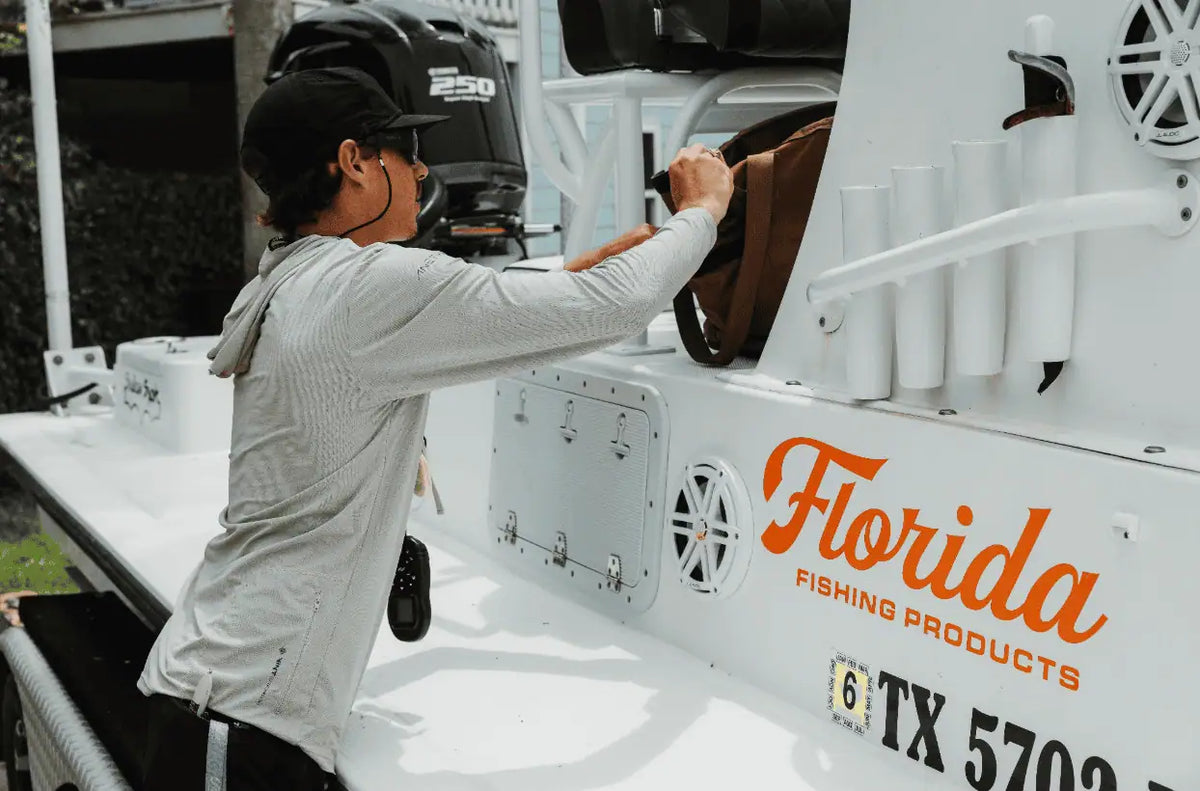
10:15 on a Tuesday. The pool's been open an hour. You’re watching a staff member at the entrance gate, and the polo's already showing it. Not a tan, just cotton doing what cotton does: clinging at the shoulders, dark down the back, heavy in the places that matter by mid-morning. The sun's been up since before their shift started, bouncing off the water, bouncing off the pale concrete, coming at them from above and below at the same time. They've got five more hours in that shirt.
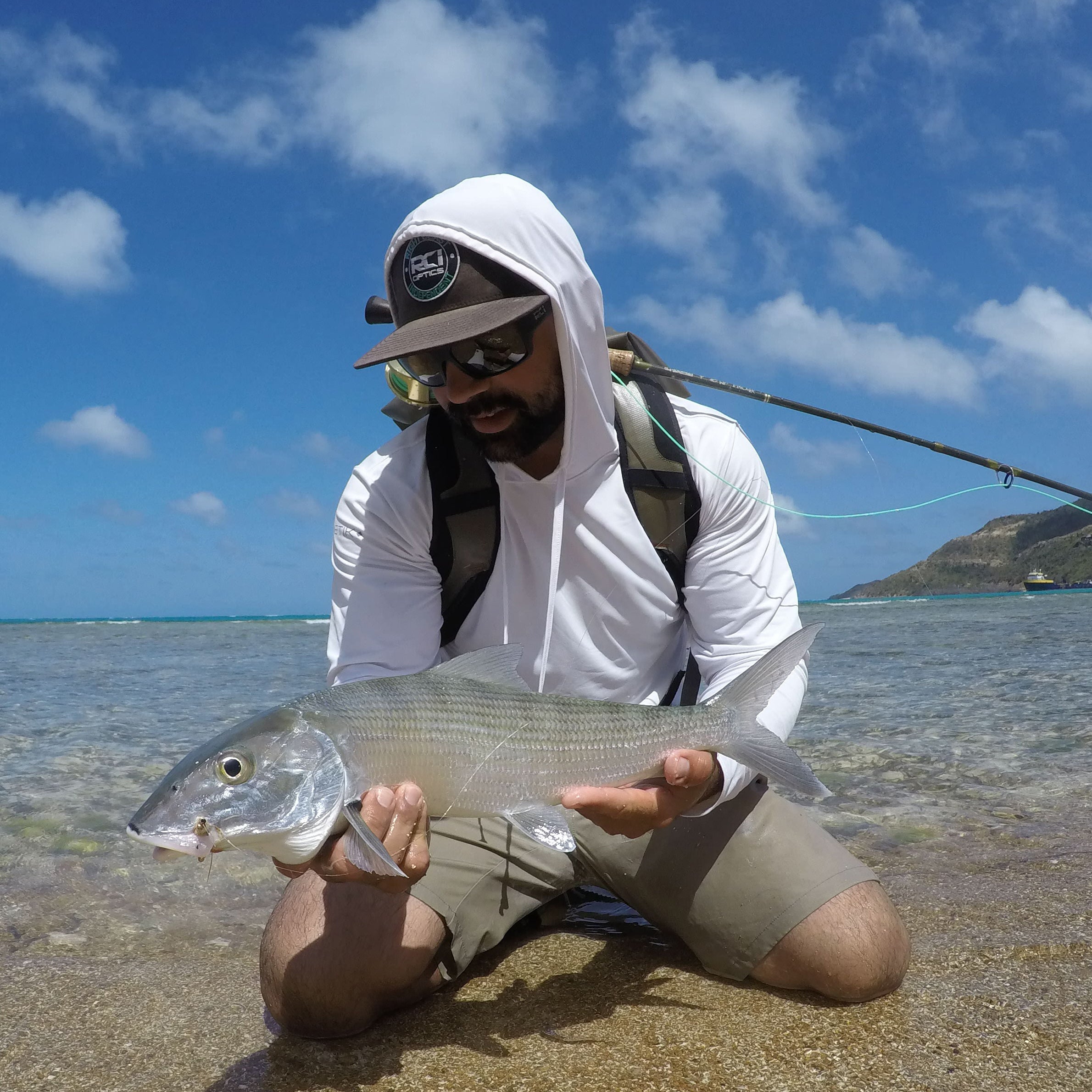
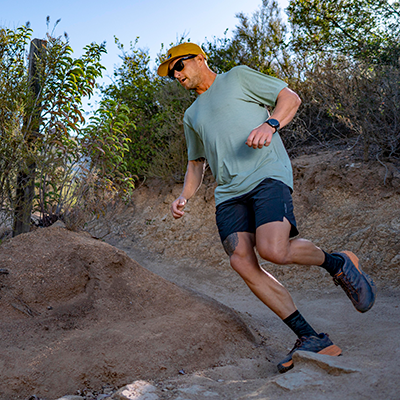
We didn't set out to make a pool staff uniform. We built gear because the people who needed it, athletes, guides, crews who work outside for a living, couldn't find anything that held up. Turns out the pool deck and the marina dock ask the same questions of a shirt that the water and the trail do. This is us answering them.
Why Pool Decks and Marina Docks Are Tougher Than They Look
Standing in an open field, UV comes from one place: overhead. Standing on a pool deck or a marina dock, it comes from above and bounces back up off the water and the pale concrete or fiberglass under your feet. Reflective surfaces like light-colored concrete and water send meaningful UV back up at exposed skin; it's a documented effect, not a guess, and it's why people who work poolside end up burned in spots that were never in direct sun.
Add heat. Concrete and white decking soak up sun and radiate it back out at ground level, so the air right where your staff is standing runs hotter than the air a few feet up. Add standing water, humidity, full sun, and constant wet-dry cycling, marina staff dealing with spray and boat exhaust, pool staff dealing with splashes and wet equipment, and you've got an environment that asks more of a uniform than almost any other outdoor job.
"It's just a shirt" doesn't survive contact with that environment. The job makes the case for taking the fabric seriously.
UPF, In Plain Terms
You know SPF from sunscreen. UPF (Ultraviolet Protection Factor) is what a fabric does instead, it measures how much UV a garment blocks before it ever reaches skin, across both UVA and UVB. A UPF 30+ shirt blocks about 97% of that radiation, and it does it whether or not anyone remembered to reapply sunscreen at 1pm.
Here's why the distinction between UPF and SPF matters for an outdoor staff:
|
Protection Type |
Method |
Covers UVA + UVB? |
Needs Reapplication? |
Holds Up Wet? |
|
SPF sunscreen |
Applied to skin |
UVB only |
Every 2 hours |
No, washes off |
|
UPF 30+ performance fabric |
Built into the weave |
Both |
Never |
Built to hold up when built right |
|
Standard cotton |
Basic weave |
Minimal (UPF 5–10 dry) |
N/A |
Drops sharply when wet |
You can't build a sun-protection plan for a whole staff roster around sunscreen. It needs reapplying every couple hours, it comes off with sweat and splash, and there's no realistic way to police that across a team all summer. A shirt just runs in the background. Nobody has to manage it.
On UPF 50+ versus UPF 30+: you'll see 50+ everywhere. Here's what it usually costs: a tighter, denser weave means less airflow and more trapped heat. We build around UPF 30+ in an open, breathable construction on purpose, because a shirt that's blocking 98% of UV while cooking your staff alive isn't actually winning. 97% protection in a shirt someone can wear comfortably for seven hours beats 98% in one they end up taking off.
What the Fabric Is Actually Doing All Shift
Moisture management. Our VINT Cooling Technology moves air two ways at once: body heat out, ambient air in, which is what drives real evaporative cooling on skin, not just sweat sitting in fabric. Cotton traps heat in both directions. VINT is built to move it.
UV protection through water contact. Our PrimoLite® construction is built to hold its protective performance wet or dry. Splash from a pool, spray off the water; it isn't degrading the shirt's job mid-shift.
Quick-dry. Because the fabric releases moisture instead of holding onto it, it dries meaningfully faster than cotton. Get splashed, and you're not stuck in a wet shirt for the rest of the day.
|
Performance Factor |
Cotton Polo |
Anetik Performance Fabric |
|
UV protection (dry) |
UPF 5–10 |
UPF 30+ |
|
UV protection (wet) |
Drops sharply |
Built to hold |
|
Moisture management |
Absorbs and holds sweat |
Wicks, enables evaporation |
|
Quick-dry speed |
Slow, stays wet for hours |
Fast, minutes |
|
Breathability |
Low, worse when wet |
High, VINT airflow |
|
Appearance end-of-shift |
Sweat-patterned, clingy |
Holds shape and color |
Your Staff Is Part of the Guest Experience
Pool clubs and marinas are hospitality businesses whether you call them that or not. What your team's wearing is part of what a guest is paying for.
A cotton polo that looked sharp at 9am can look tired by 11, sweat patches, fabric gone soft, color starting to fade. That's not neutral. It tells a guest something before your staff says a word. Gear that holds its shape and color all shift means staff at 3pm look like staff at 9am, small thing in the moment, real thing across a whole season of guest impressions.
And if you're outfitting a full roster, 10, 20, more staff, durability is a budget line, not just an appearance one. Uniforms that hold up through the season get replaced less. If that's the situation you're in, our bulk ordering program is built for teams that need consistent sizing and reliable reorders across a full crew, not just a one-off purchase.
Comfort Isn't a Perk. It's an Operating Variable.
This is the part of the uniform conversation nobody has.
OSHA's own heat hazard guidance lists clothing that traps body heat as a real factor in occupational heat stress, and CDC-reviewed case data on heat-related workplace illness has found clothing choice among the contributing factors investigators look at. A staff member in cotton on a hot deck is building heat load all shift. One in breathable, moisture-managing fabric is shedding it.
That's not just a comfort issue:
- An overheated lifeguard is a slower lifeguard. Attention narrows, reaction time slips — that's not a guess, it's what heat does to a body under load.
- Staff who are miserable in their uniform don't stick around outdoor hospitality roles that already fight turnover every summer. A shirt that makes the job physically worse is a quiet contributor to that churn.
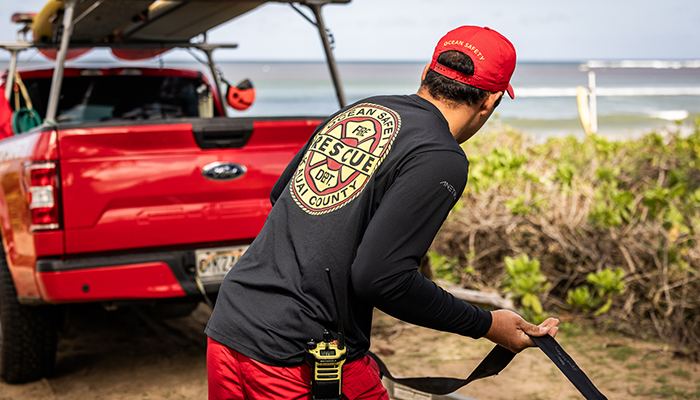
We've built gear that gets tested in places where this isn't theoretical: Navy personnel, Miami SWAT, LA lifeguards, and Hawaiian lifeguard associations have all worn Anetik in conditions where gear failure isn't an inconvenience. Pool decks and marina docks are demanding in a different way, but they're demanding for the same reason: heat and UV don't care what the job title is.
What to Actually Look For
Fabric type comes first. Performance polyester or a poly-blend, not cotton, not a cotton-poly blend; the moisture and UV-stability gap between synthetic and natural fiber is wide enough that no other feature makes up for getting this wrong.
- A stated UPF 30+ rating, tested, not just assumed from the fabric type.
- Built-in moisture management, not a generic "moisture-wicking" label; ask what's actually driving it. VINT Cooling Technology is active two-way airflow, which is a different (and higher) bar than passive wicking.
- UV performance that holds up wet, worth asking directly, since some basic performance fabrics test differently wet than dry.
- A cut that reads professional, not gym-issue. Performance fabric doesn't have to look like athletic wear, our polos and button-ups are built for waterfront hospitality, not the weight room.
Same performance, same UPF 30+, same VINT construction runs through our women's collection too.
Built for the Shift You're Actually Working
Cotton was never built for a pool deck or a marina dock in July, it just never got challenged, because performance fabric conversation was happening in outdoor sports, not outdoor hospitality staffing. Your team is standing in one of the toughest UV environments there is, all shift, every day of the season. The fabric they're wearing either helps them handle that or it doesn't.
Explore the full performance collection built for exactly these conditions, or head straight to bulk ordering if you're outfitting a team.
FAQs
Do you offer bulk ordering for pool and marina teams? Yes, built for operations that need volume, consistent sizing across a roster, and reliable reorders season over season.
Is UPF 30+ enough for a full outdoor shift? Yes. UPF 30+ blocks about 97% of UV radiation, both UVA and UVB. UPF 50+ blocks roughly another 1%, and that gain usually comes with a real breathability and heat cost. For staff working full shifts in summer heat, staying cool matters as much as blocking that last percentage point.
What's the difference between "moisture-wicking" and VINT Cooling Technology? Generic moisture-wicking on a poly shirt passively pulls some sweat off skin. VINT is a specific knit construction built for active two-way airflow, heat out, air in, which is what actually drives evaporative cooling, not just a drier shirt.
What should outdoor workers' clothing actually prioritize in summer? UPF protection that holds up wet, breathable construction that doesn't trap heat, and fast dry time; cotton and basic performance shirts each fall short on at least one of these for staff working full outdoor shifts.

Leave a comment
This site is protected by hCaptcha and the hCaptcha Privacy Policy and Terms of Service apply.