





Most surf apparel is designed to keep the board wax off your chest, not to actually keep you protected and comfortable through a full session. Sun exposure compounds fast on the water. UV reflects off the surface. You're out there for hours. And whatever you're wearing is either working for you or not-so-quietly working against you.
We learned that the hard way, a full morning session in a cotton long sleeve, thinking we were covered. By noon, we're sunburned through it, soaked, chafed, and done. The shirt hadn't protected us. It had just made everything worse.
Here's what actually matters on the water, and why the right gear changes the whole equation.
Why What You Wear in the Surf Actually Matters
Sun protection on the water is a different problem than sun protection on land. UV rays hit you directly from above and reflect back up off the surface, which means your exposure is compounding the entire time you're out there. Sunscreen alone can't keep up:
- It washes off in saltwater faster than the label suggests
- It degrades with UV exposure throughout the day
- It gets missed on the spots you can't reach mid-session, the back of your neck, behind your ears, your forearms mid-paddle
UPF-rated surf clothing closes that gap. UPF (Ultraviolet Protection Factor) measures how much UV radiation a fabric actually blocks. Our apparel carries a UPF 30+ rating, built into the weave of PrimoLite® mesh, not sprayed on, not a finish that degrades after a season of saltwater. It's doing the same job on session 200 as it did on session one.
UPF 30 blocks 96.7% of UV radiation. UPF 50 blocks 98%, per the Skin Cancer Foundation's UPF standard. That's a 1.3 percentage point difference in what actually reaches your skin, and getting there usually means a tighter weave that traps heat instead of moving it. For a rash guard you're wearing for hours in the sun, that tradeoff isn't worth it. UPF 30+ gets you into "very good" territory on protection without giving up the airflow that keeps you in the shirt instead of taking it off.
Breathability is the other half of the equation. Most rash guards are built for water entry, not for everything that surrounds it:
- The hour you spend waiting in the lineup
- The paddle back out after a long wave
- The walk from the parking lot in full sun
Thick, sticky fabric that traps heat and clings when wet is miserable. And miserable gear gets taken off, which is exactly when you lose the protection it was supposed to provide. Our VINT Cooling Technology keeps air moving in and out through the fabric even when you're working hard, so you stay cool above the waterline and protected the whole time you're in it.
The Under-Wetsuit Problem Most People Don't Think About
If you wear a wetsuit, what you have on underneath matters more than most people give it credit for. Bare skin against neoprene means friction, and over a long session, that friction becomes real chafing at the neck, wrists, and anywhere the suit moves against you.
A thin, breathable base layer solves this. It also makes getting in and out of a wetsuit significantly easier, fabric slides where bare skin grabs. Our Mission Undershort and Mission Underpant are built exactly for this: ultralight, UPF 30+ base layers designed for rash protection in and out of the water. Thin enough that you don't notice them under a wetsuit. Built well enough that you notice when you're not wearing them.
What to Look for in Surf Apparel
Not all surf clothing does the same job. Here's what separates gear worth wearing from gear that just looks the part:
- UPF 30+ built into the fabric: not a spray finish, not a marketing claim; a tested rating that holds through repeated saltwater exposure and doesn't wash out
- Quick-dry construction: fabric that sheds water fast and doesn't cling or drag when wet
- Full mobility: stretch fabric that moves with your paddle stroke, not against it; if you can't reach full extension without the shirt pulling, it's the wrong shirt
- Breathability above the waterline: you spend as much time out of the water as in it; gear that traps heat in the lineup is gear you'll want to take off
- Rash protection: flat seams and smooth construction anywhere fabric meets skin under repeated movement; the details that don't show up until hour three
Gear that checks all five disappears into the session. You stop thinking about it, which is exactly where it should be.

How to Build Your Surf Kit
You don't need every piece. You need the right ones for how you actually surf.
|
Session Type |
Top Pick |
Why |
|
Dedicated water time |
No drag, rash protection, quick dry |
|
|
Long sun exposure |
VINT Cooling Technology + UPF 30+ above and below the waterline |
|
|
Under a wetsuit |
Eliminates neoprene friction, adds UPF 30+ base layer |
|
|
All-day beach + water |
Full coverage, lightweight, moves with you |
|
|
Warmer water, shorter sessions |
Rash protection without the long sleeve commitment |
|
|
Bottom half |
360° stretch and quick dry for in and out of the water |
Start with what matches your most common session. Build from there.
What Real Time in the Water Says
"By far the most comfortable, versatile SPF shirt I own. Cool enough for Hawaii weather and warm enough for Oregon weather." — Grant, offshore kayak fisherman, Hawaii Nearshore Fishing
That's not a lab result. That's someone who's logged real hours in real conditions across two very different climates, and came back to tell people about it unprompted. That's the kind of review you can't manufacture.
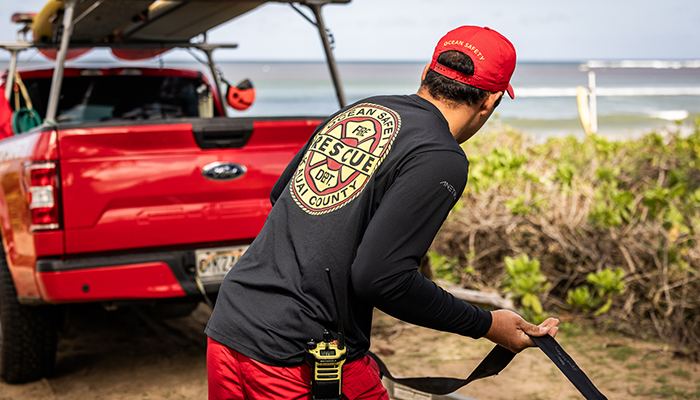
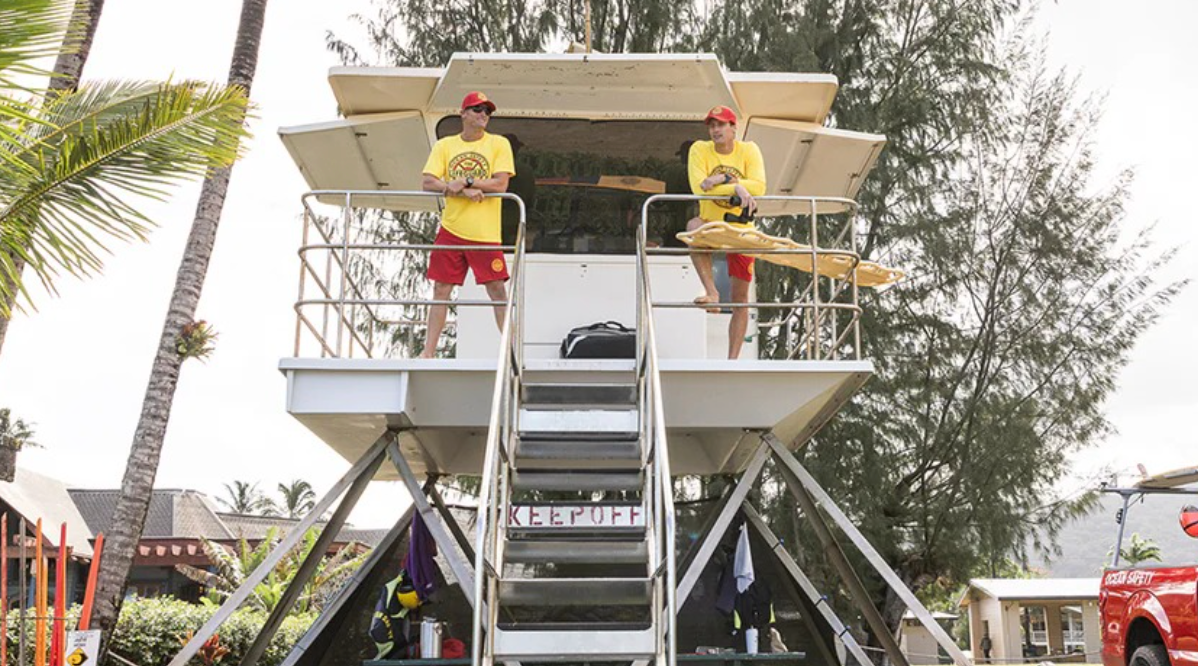
We didn't build this gear in a boardroom. Our Advocates of Chaos, the surfers, watermen, guides, and lifeguards who helped shape everything in our lineup, have put these pieces through conditions that most apparel doesn't survive. The Hawaiian Lifeguard Association, Los Angeles Lifeguards, and Miami Beach Lifeguards are among our Premium Partners. These aren't brand deals. These are people who depend on their gear to function in the ocean every single day, and they chose ours.
The ocean doesn't care how good your sunscreen smells or how sharp your boardshorts look in the parking lot. It cares whether your gear can handle hours of UV, saltwater, repeated paddling, and everything else a real session throws at it. We built our surf line because we needed it to exist, and nothing else was doing the job the way it needed to be done.
Explore the full surf collection and build a kit that's ready for real conditions.
FAQs
Does UPF clothing replace sunscreen for surfing? No, but it handles the job better for anything the fabric covers. Sunscreen washes off, degrades in saltwater, and gets missed in spots. UPF 30+ built into the fabric provides consistent, all-day coverage on covered areas without reapplication. Use both: UPF clothing for coverage, broad-spectrum sunscreen for your face, hands, and neck.
What's the difference between a rashguard and a surf tee? A rashguard is purpose-built for in-water rash protection, tighter, smoother construction designed to minimize friction against the board and wetsuit. A surf tee offers more casual fit and style flexibility while still delivering rash protection and UPF coverage. Both have their place depending on the session.
Can I wear ANETIK gear under a wetsuit? Yes, and it helps. Our Mission Undershort and Underpant are specifically built for this: ultralight base layers that reduce neoprene-on-skin friction, make suiting up and down easier, and add UPF 30+ coverage underneath. Thin enough to not affect wetsuit fit.
Why does quick-dry matter for surf clothing? Because you spend as much time out of the water as in it. Fabric that holds water stays heavy, clings to skin, and chafes. Quick-dry construction sheds water fast so the transition between in and out of the surf stops being a factor.
How do I care for surf apparel to keep it performing? Rinse in fresh water after every saltwater session; salt degrades fabric over time if left in. Hand wash or gentle cycle, cold water, no fabric softeners. Air dry in shade.

Leave a comment
This site is protected by hCaptcha and the hCaptcha Privacy Policy and Terms of Service apply.