





Here's what nobody tells you when you're four hours into an offshore trip: that cotton shirt you packed isn't doing a single thing to protect your skin. SPF tells you how long before you burn. UPF tells you how much never gets through at all.
Both ratings measure sun protection. Both matter. But they work differently, cover different ground, and if you're spending real time outdoors, on the flats, on the course, on the trail, understanding the difference isn't just trivia. It's the thing standing between you and a long day of sun damage you won't feel until it's too late.
What Is SPF?
SPF stands for Sun Protection Factor. It measures how well a sunscreen shields your skin from UVB rays, the ones most responsible for sunburn. An SPF 30 sunscreen, for example, blocks about 97% of UVB rays under controlled lab conditions.
A few things worth knowing about SPF before you reach for the bottle:
- SPF only measures UVB protection, not UVA rays, and UVA rays are the ones quietly aging your skin and raising your cancer risk even when you don't burn.
- Sunscreen effectiveness drops fast in the field: Most people apply far less than the tested amount, and sweat, water, and UV exposure degrade it throughout the day. That SPF 50 on the label is rarely SPF 50 on your skin.
- Broad-spectrum sunscreen, with ingredients like zinc oxide or titanium dioxide, is recommended for both UVA and UVB coverage. If your bottle doesn't say broad-spectrum, it's only doing half the job.
SPF is a useful tool. It's just not the whole toolkit. It covers exposed skin well when applied correctly and reapplied consistently, two things that are a lot easier said than done when you're out on the water or grinding through the back nine. That's where UPF clothing picks up the slack.
What Is UPF?
UPF stands for Ultraviolet Protection Factor, the rating system built specifically for clothing. A garment rated UPF 50 allows only 1/50th of the sun's UV radiation to reach your skin, blocking 98% of harmful rays. And unlike sunscreen, it doesn't need reapplication.
It's a tested, certified number, not a marketing claim. The Skin Cancer Foundation has a solid breakdown of how UPF is measured and what those ratings mean in practice. Worth reading if you want to understand what's actually happening at the fabric level.
Here's What UPF Does That SPF Can't:
- Blocks both UVA and UVB rays in a single layer: no reapplication, no missed spots.
- Stays effective all day: critical when you're four hours into a float and the last thing on your mind is whether you remembered to reapply.
- Covers more surface area with consistent protection: not just the spots you happened to hit with sunscreen.
That said, UPF isn't indestructible. High-quality UPF clothing is significantly more durable than sunscreen, but stretching, repeated washing, and extended wet conditions can reduce protection over time. That's why garment construction matters, and it's why a certified rating from a reputable brand means more than a generic "sun protective" label.
The Hard Truth About Your Regular Clothes
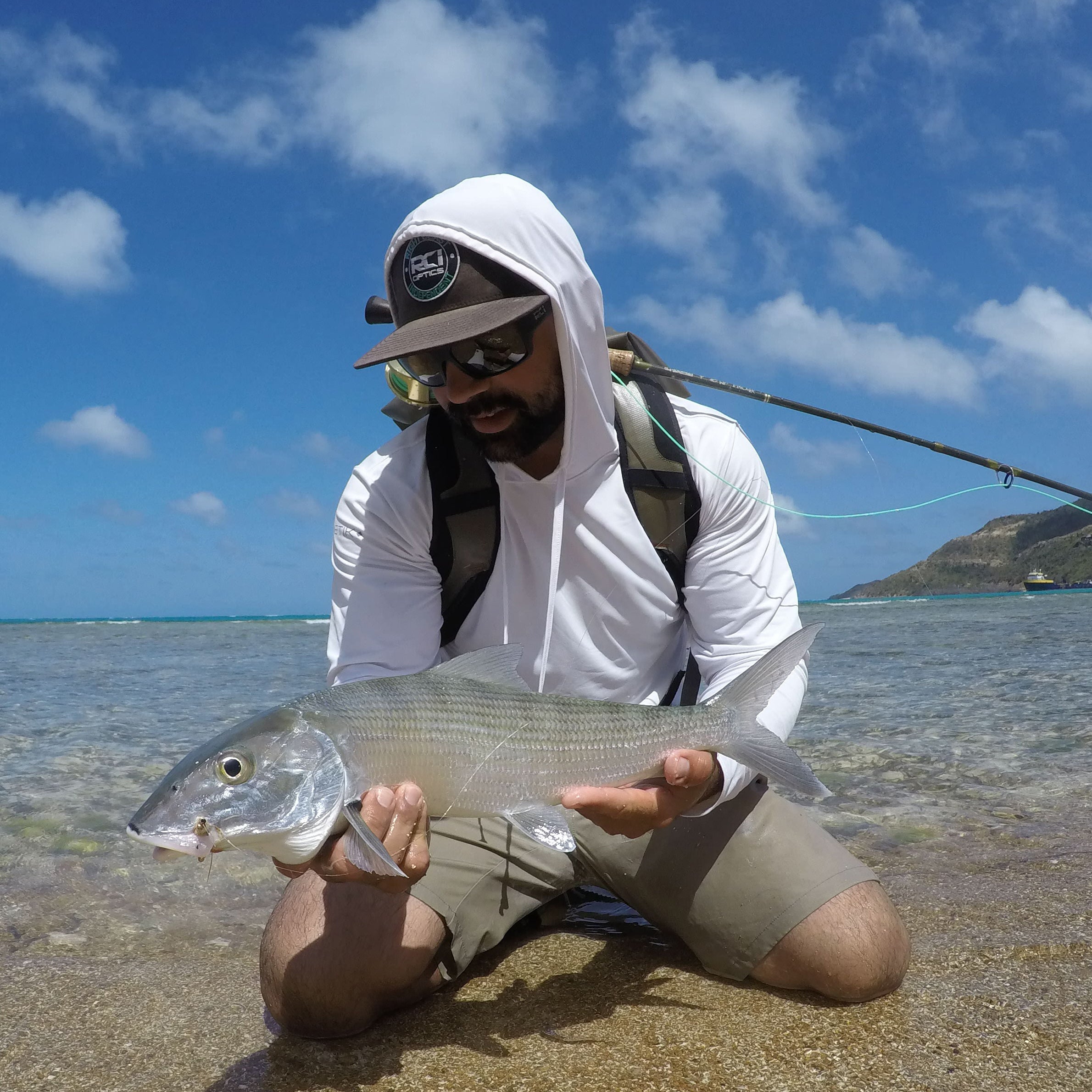
Here's the hard truth: most people assume a standard cotton T-shirt gives them reasonable protection. It doesn't. A typical white cotton tee has a UPF rating of around 5, meaning roughly 20% of the sun's UV radiation passes straight through to your skin. We found out the hard way, a full day on the flats, thinking we were covered, only to peel for a week. The shirt felt fine. My shoulders disagreed.
Dark colors, tighter weaves, and synthetic fabrics all perform better than light, loosely woven natural fibers. But "better than nothing" isn't the same as "actually protecting you." That's the gap a certified UPF rating fills.
How to Choose the Right UPF Clothing
Not all UPF clothing is built the same. Here's what to know before you buy.
Understanding the UPF Scale
- UPF 15–24: Good protection, extreme breathability if not natural fabrics
- UPF 25–39: 97% Blocked UV Rays, Ultralight, extreme breathability,
- UPF 40–50+: 98% Blocked UV Rays, Heavier fabrics, limited breathability
Fabric Matters
Polyester, nylon, and spandex blends typically outperform natural fibers like cotton when it comes to UV transmission. Tighter weaves and darker or brighter colors absorb more rays. Loose, light weaves let more UV pass through, which is why that linen shirt feels breezy but isn't protecting much.
 Design Features Worth Looking For
- Loose-fitting construction increases air circulation without compromising coverage, you don't have to choose between protected and comfortable.
- Long sleeves, hoods, and high collars cover the spots most people forget: the back of the neck, the tops of the ears, the forearms.
- Quick-dry materials keep you comfortable when you're sweating or wet, because if a shirt is miserable to wear, you won't keep it on, and that's when you lose the protection entirely.
The best UPF clothing disappears on your body. You stop thinking about it, which is exactly the point. If you're adjusting, overheating, or peeling layers off two hours in, the protection doesn't matter because the shirt isn't on you anymore.
The Science of Sun Protective Clothing
According to the Skin Cancer Foundation, UPF-rated fabrics are one of the most effective tools for preventing sun damage and reducing long-term skin cancer risk. The protection a garment delivers depends on fabric density, color, stretch, and how it holds up over time.
The bottom line on the science: a well-constructed UPF garment is doing something a cotton tee simply cannot. It's not marketing, it's a tested number with real methodology behind it.
Common Myths About UPF and SPF
Trust us, there are plenty, but these are the biggest ones.
- "My regular T-shirt is fine." A standard cotton shirt typically rates around UPF 5–10, well below the threshold dermatologists recommend for meaningful sun protection. Most people don't realize how little protection everyday clothing actually provides.
- "UPF washes out completely." The truth is more nuanced: clothing with inherent UV-protective properties (built into the fiber itself) retains its rating much better over time than chemically treated fabrics. High-quality UPF clothing holds up, but no garment lasts forever.
- "All clothing colors are equal." They're not. Dark and bright colors absorb more harmful rays. Lighter shades let more UV light through, which is one reason construction and fabric choice matter more than just throwing on any long-sleeve shirt.
While it’d be convenient to believe these myths, they’re simply not true.
Combining UPF and SPF for Maximum Sun Protection
The most effective approach uses both, and the logic is simple:
- UPF clothing handles the large surface areas: torso, arms, legs.
- Broad-spectrum sunscreen covers the gaps: face, hands, ears, neck, and anywhere else the fabric doesn't reach.
- Shade, hats, and accessories are your first line of defense and should always be part of the equation.
SPF covers the gaps. UPF covers the rest. The difference isn't technical trivia, it's the thing standing between you and a long day of sun damage you won't feel until it's too late. Gear that actually earns its place in your kit starts with knowing what it's rated to do.
Why Choose ANETIK for UPF Clothing
ANETIK was built by athletes who've spent enough time outdoors to know what actually works. Our apparel uses advanced fabrics like PrimoLite® and GHOSTLIGHT® to deliver lightweight, breathable performance with reliable UPF ratings, tested, not assumed. From fishing and surfing to golf and running, ANETIK UPF clothing is engineered to protect your skin while helping you perform at your best.
Explore our collection of UPF clothing and build a kit that's ready for real conditions.
FAQs About UPF vs SPF Clothing
Q: Does UPF clothing replace sunscreen? No. UPF clothing handles covered areas better than sunscreen can, but broad-spectrum sunscreen is still essential for exposed skin, face, hands, neck, ears.
Q: How do I know if my clothing has UPF protection? Look for a certified UPF rating on the garment. Clothing makers must test fabrics to earn these labels; it's not self-reported.
Q: What UPF rating is best for outdoor athletes? This question is best answered by our pros out in the field. A UPF 50 shirt will protect you from more sun but will become heavy, hot and stay wet longer than a UPF 30 shirt while only protecting you from 1% less sun rays. If you take it off, it isn't working. UPF 30 shirts are designed to be worn all day long.
Q: Does fabric wear reduce UPF? Yes. Stretching, repeated washing, and wet conditions can reduce protection over time, especially in chemically treated fabrics. High-quality UPF clothing is designed to hold up longer, but no garment lasts forever. ANETIK doesn't use chemical UPF treatment so there is nothing to washout. Just high quality gear that works.



Leave a comment
This site is protected by hCaptcha and the hCaptcha Privacy Policy and Terms of Service apply.