





The boat leaves at 6am. By the time you clear the inlet, the wind is coming off the water at fifteen knots, and someone near the bow is already shivering in a cotton t-shirt. Four hours later, that shirt is soaked with salt spray, draped over the rail, and that same person is sunburned on both sides of their arms from a direction they didn't expect.
That's not a bad luck story. That's just what happens when you treat offshore like any other day outside.
The Hard Truth About Sun on Open Water
Most people only think about UV coming from above. What they miss is the UV coming from below.
Open water reflects a meaningful share of UV radiation back upward, dermatologists put the figure at up to 10% at the surface, which means your face, neck, and the undersides of your forearms are getting hit from two directions at once for the whole trip. Add six to eight hours on an open deck with zero shade, and sunscreen alone isn't a plan. Water-resistant sunscreen needs reapplying roughly every 80 minutes in the water, and nobody's reapplying it while fighting a forty-pound mahi.
Here's where most deep sea fishing outfit advice gets it wrong: it tells you to find the highest UPF rating you can find, then stops there. The real question isn't what the label says, it's what you'll actually keep on all day.
A UPF 50+ shirt you're going to roll up, take off, or stop wearing by 10am because it's too heavy is worse protection than a UPF 30+ shirt with VINT Cooling Technology you'll actually keep on all day, because it's lightweight, breathable, and designed for an active lifestyle. Comfort compliance is better protection. That's the honest calculation.
Why Offshore Dressing Is Different
Three things separate deep sea fishing from a hike, a round of golf, or a day at the beach.
- The temperature swing is real. Departure at 6am can be fifteen to twenty degrees cooler than midday, and wind chill on open water stretches that gap further once you're wet. What feels fine at the dock isn't what you'll want at noon.
- You will get wet. Salt spray, fish slime, a wave off the bow, this is a certainty, not a possibility. Cotton holds every drop of it against your skin. Performance synthetics wick moisture and dry fast, so you're not carrying that weight around for the next six hours.
- There's no shade. Unlike a trail in the trees, you're on an open deck with nothing between you and direct sun for the full duration.
Dress for all three, not just the one on the forecast.
Your Deep Sea Fishing Outfit, Top to Bottom
We'll go top to bottom, but the order here isn't just structural. Not all of these decisions carry equal weight, and one of them determines how the whole day goes.
The Sun Layer: Your Most Important Decision
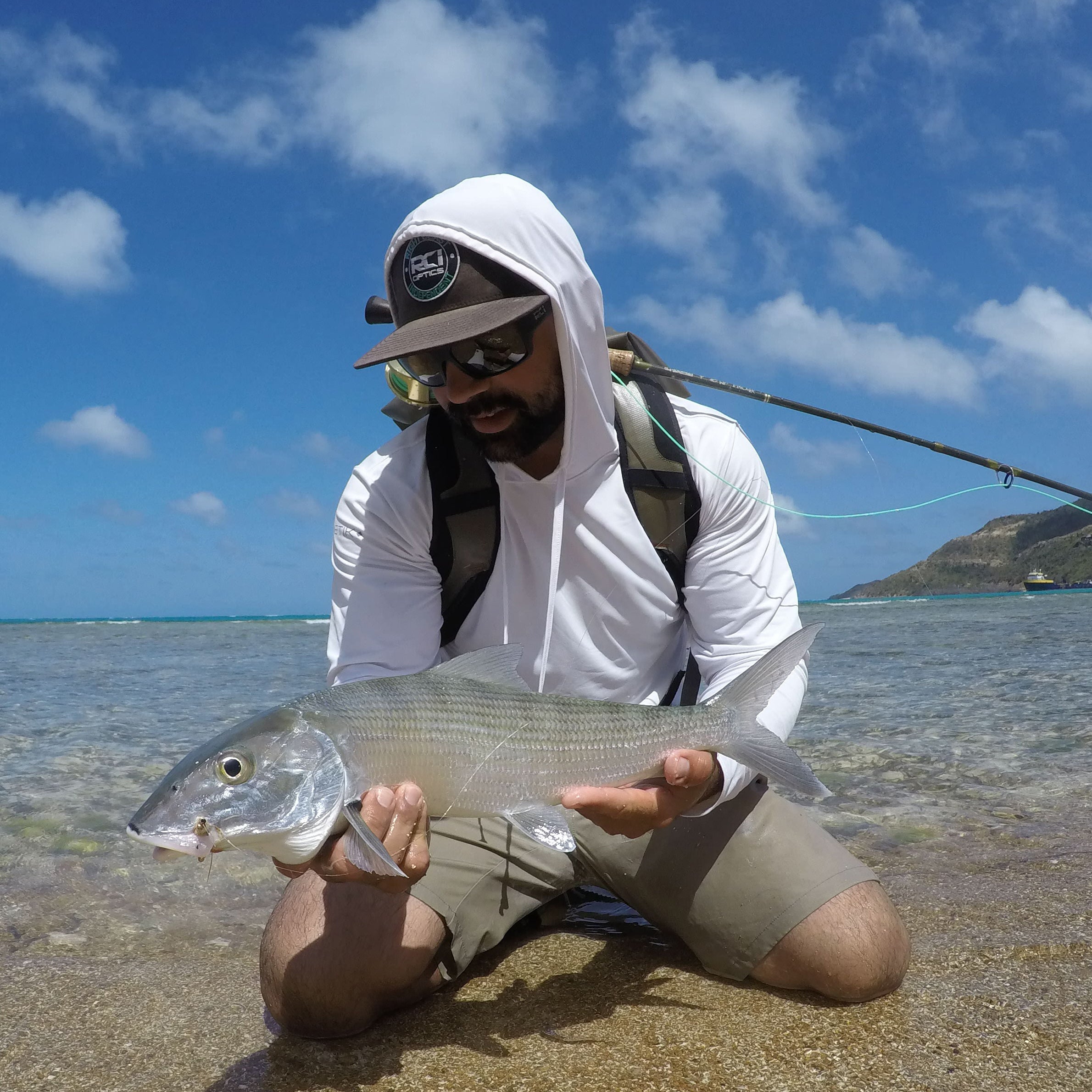
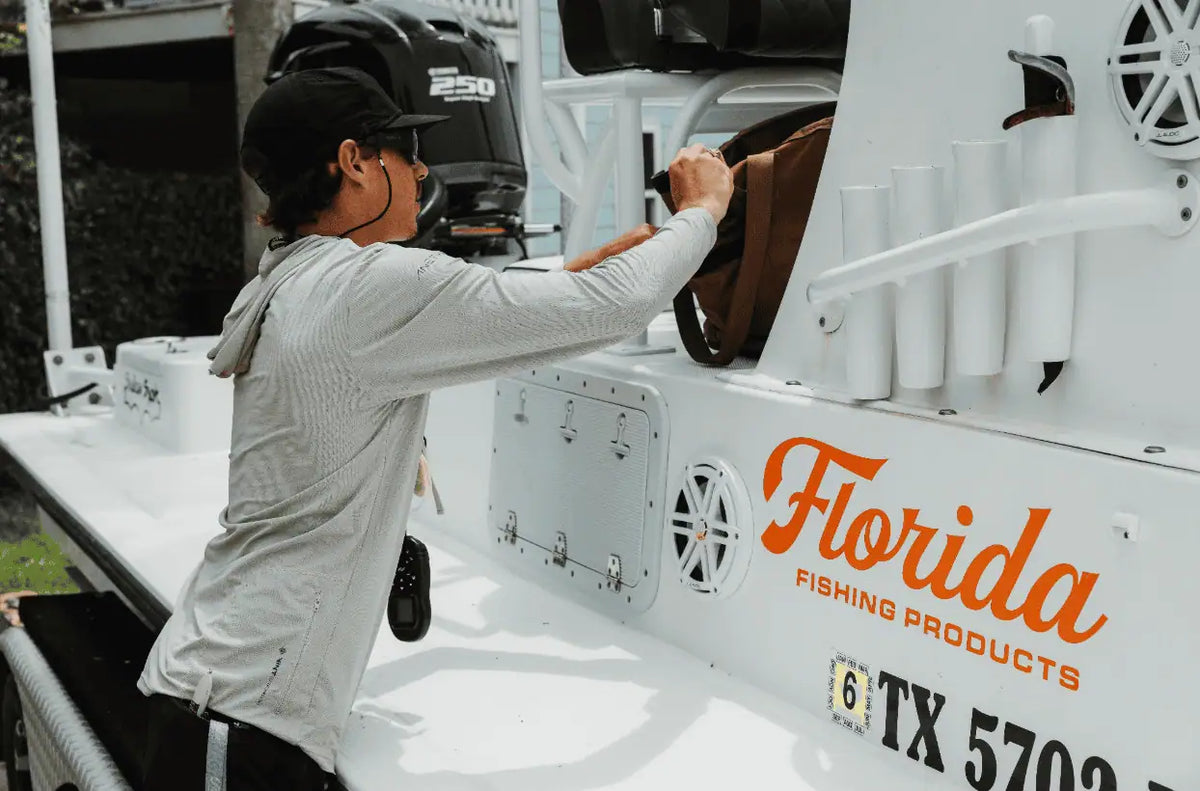
The case for long sleeves on the water sounds counterintuitive, but it's real: a good long sleeve performance piece creates a moving-air buffer between fabric and skin that keeps you cooler than bare skin in direct sun, while cutting UV from both directions at once.
Our Low Pro Tech Hoody was built for exactly this kind of day:
- VINT Cooling Technology™ keeps airflow moving constantly through the body and hood — this is the part that actually gets you to keep it on past 10am.
- UPF 30+ protection from ultralight 360° stretch fabric, built into the weave, not a chemical coating that wears off in one wash.
- Feels like wearing almost nothing, which is the whole point.
For anglers in full tropical heat or in-and-out of the water, the AMP Rashguard is the right call, a slim, non-bunching fit built around PrimoLite® mesh with no bulk under a life vest.
One more rule: light colors over dark ones. Dark fabric absorbs heat, and on a 90°F day with no shade, that difference compounds over a full day.
Face and Neck: The Part People Always Skip
Your cheeks, jaw, and the underside of your neck sit in the direct path of reflected UV for the whole day. Sunscreen applied at the dock isn't going to be there by 2pm.
The Mission Shade Mask solves this without making you feel like you're suffocating:
- VINT Cooling Technology + PrimoLite® UPF 30+ mesh
- Laser-cut breathable holes prevent glasses from fogging; small detail, but it's the one that gets people to actually leave the mask on
- Covers the reflected-UV zone underneath your jaw and neck, not just your nose
Pair it with a hat from our hat collection. If you're running out in a headwind, get one with a chin strap. A hat that blows off in the first ten minutes is just extra weight in your bag.
The Wind and Rain Layer
Every experienced captain has said some version of this: it looked clear when we left. Ocean weather moves fast, and the run home at 4pm can be cold and wet even if the morning was perfect. These two pieces solve two different problems; pick based on which one you're actually up against.
- Revolt Wind/Rain Jacket: This one's fleece-lined, so it's not for the hot part of the day, it's for the cold front nobody forecasted, or the 4pm run home when the temperature's dropped fifteen degrees and you're soaked. Smoothskin water-resistant shell outside, real warmth inside, packs down small into a dry bag.
- Mirage Ultralight Shell: No insulation, 360° active stretch, packable. This is the one for a warm day with an uncertain sky, wind coverage without turning into a sauna the second the sun comes back out.
You'll either be glad you brought one of these, or you'll never need it. One of those outcomes is fine.
Bottoms
Simple rule: quick-dry, stretch, not denim. Wet denim stays wet for hours, restricts movement, and doesn't forgive a wrong step on a moving deck.
- Roam Tech Short: the warm-weather, full-day choice when you know what you're getting into.
- VINT Tech Pant: the better call on cooler mornings, long trips, or any day the weather's uncertain.
Pick based on the day. When the bite is on, you won't think about either of them again — which is exactly the point.
The Foundation Layer
In hot weather, no base layer needed; our pieces work directly against the skin. In cold conditions, wool is the right choice underneath; it regulates temperature, manages moisture without holding odor, and stays warm even when it's wet. Our pieces layer over it.
For warm-weather moisture management without added bulk, the Mission Underpant handles a full day of physical activity without creating discomfort.
Feet and Ankles
Two things matter here, and only one of them is footwear.
For shoes: non-slip rubber soles, closed toe, no flip-flops. A wet deck with hooks and fish spines on it is not the place for open toes. We don't make deck shoes; get the right ones from someone who does, and don't compromise on this one.
For sun exposure: the tops of your feet point directly at reflected UV all day. Mission Shade Socks are built from PrimoLite® UPF 30+ mesh and cover the exposure your shoes don't. It's one of those pieces you won't think about until you're burned and wishing you had them.
What to Wear Deep Sea Fishing: A Woman's Kit
Same conditions, same UV, same wet deck. What's different is fit, and fit is the difference between a hoody that vents the way it's supposed to and one that bunches at the shoulder seam and traps the heat you didn't need trapped.
Our women's line runs the identical UPF 30+ spec, cut to actually fit:
- Women's Flight Tech Hoody: VINT Cooling Technology, PrimoLite® mesh, long sleeve coverage — the one to reach for on a full-sun day.
- Women's Breeze Tech Hoody: same tech, lighter build, for when you want the coverage without any extra weight on you.
- Women's Mirage Ultralight Shell: packable wind protection, 360° stretch.
- Women's VINT Tech Pant: quick-dry performance bottoms, built to move on a deck that doesn't hold still.
The Mission Shade Mask, Mission Shade Socks, and hats are unisex; wear whatever color works.

What You'll Regret Skipping
This section deserves honesty, not a bullet list of disclaimers.
Cotton is the biggest mistake people make. Not because it "absorbs water" in the abstract, but because a cotton shirt soaked with salt spray at 8am is cold, heavy, and stiff for the remaining five to eight hours of your trip, with nothing you can do about it twenty miles offshore. Performance synthetics aren't a luxury. They're the difference between enjoying the day and surviving it.
The rest of the gear people wish they'd packed:
- Face and neck cover. A Mission Shade Mask weighs nothing and works all day. The sunburn it prevents costs you considerably more.
- A wind layer. Pack it, leave it in the dry bag. You'll either need it or you won't.
- Non-slip shoes. Flip-flops + wet deck + fishhooks = bad outcome. This is the safety one, not the comfort one.
- Shade socks. The tops of your feet are pointed at reflected UV all day. They will burn if you don't cover them.
- Light-colored tops in summer. Dark fabric absorbs heat. On an open deck for eight hours, that's real and cumulative.
None of it is heavy, none of it takes up much room. It's just easier to skip when you're excited about the trip, and a lot harder to deal with once you're twenty miles out and the wind picks up.
Deep Sea Fishing Outfit: Quick Reference by Conditions
|
Conditions |
Core Layers |
Don't Leave Without |
|
Warm summer day (80°F+) |
UPF 30+ long sleeve hoody + quick-dry shorts |
Face mask · shade socks · hat |
|
Cool morning departure |
Hoody + wind/rain layer |
Hat with brim · dry bag |
|
Mixed forecast |
Hoody + Revolt Jacket |
Extra dry shirt |
|
Tropical / in-and-out of the water |
AMP Rashguard + board short |
Face mask · polarized sunglasses |
|
Overnight / multi-day trip |
Full kit + wool base layer + spares |
Dry bag packed like a vacation |
Get It Right Before You Leave the Dock
Deep sea fishing puts you in full sun, on open water, with no shade, for six to twelve hours. What you wear decides how much of that you actually enjoy.
We built our Fishing Performance line because generic outdoor apparel wasn't cutting it on the water, not for a real day offshore. VINT Cooling Technology and PrimoLite® mesh exist because breathability and UPF protection shouldn't be a tradeoff. The gear that actually stays on your body all day is the gear that actually protects you all day. That's what we solved, and it's still how we build everything.
Get the sun layer right. Add the wind layer that actually matches the day. Cover your face and neck before the first burn, not after. The rest is up to you.
Shop the Fish Performance collection, built for exactly this kind of day.
Frequently Asked Questions
Can I wear a swimsuit deep sea fishing? Yes, as an underlayer, but wear a long sleeve UPF sun layer over it and keep wind protection close. A swimsuit alone isn't enough for a full day offshore.
What shoes should I wear deep sea fishing? Non-slip, rubber-soled, closed-toe. Flip-flops on a wet deck with hooks on it is a safety issue, not just a comfort one.
What do I wear on a cold deep sea fishing trip? Wool base layer first, UPF 30+ performance hoody over it, then the Revolt Wind/Rain Jacket as your outer shell for real cold or wet conditions. Pack spares in a dry bag.

Leave a comment
This site is protected by hCaptcha and the hCaptcha Privacy Policy and Terms of Service apply.