






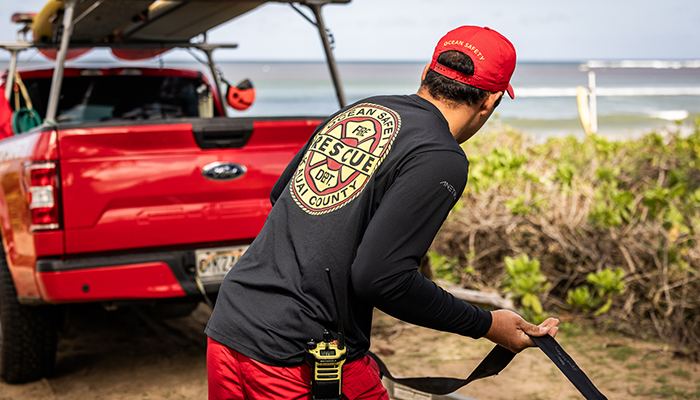

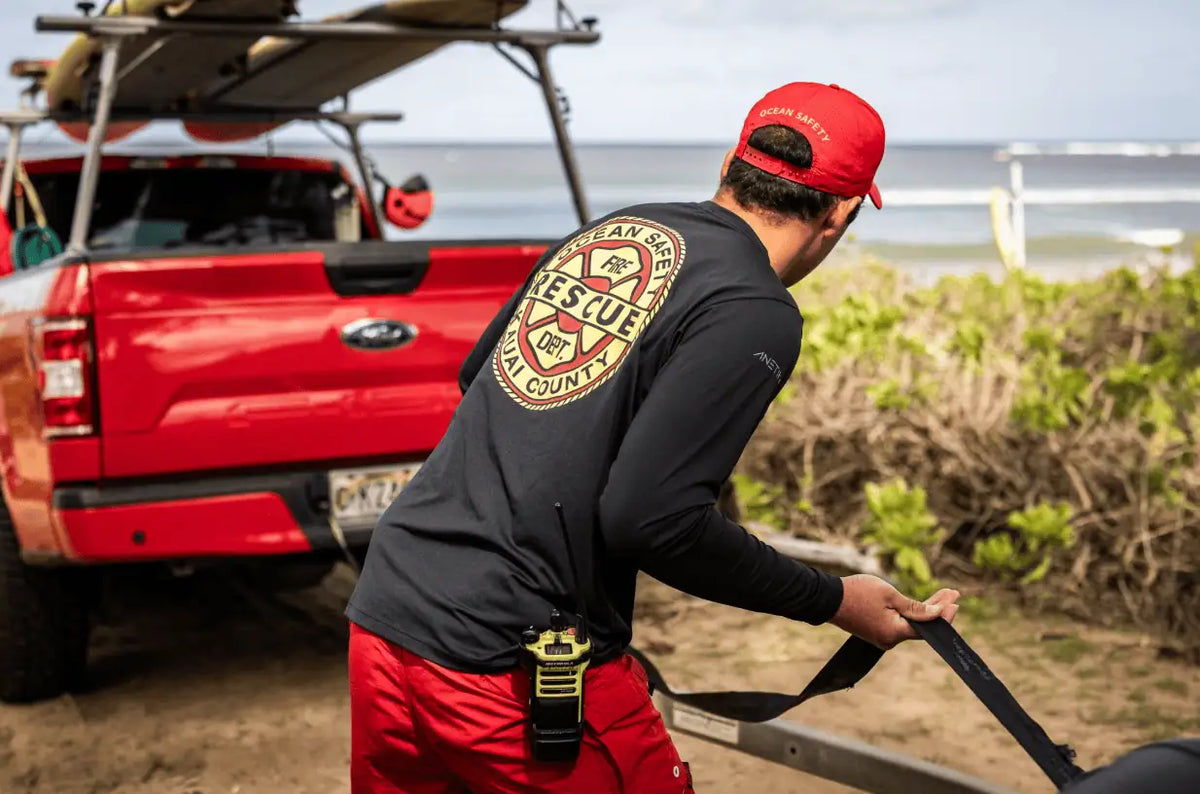
When's the last time you looked at the UPF rating on your work shirt?
Not the brand name. Not the fit. The number that tells you how much UV radiation it's actually blocking while you're out there for eight, ten, twelve hours. If that number isn't on the tag, or you've never thought to look for it, that's exactly where this starts.
We didn't get this right on the first try either. VINT Cooling Technology and PrimoLite® mesh exist because the gear we had wasn't holding up to a real shift in real heat. Everything below is what we learned figuring that out.
What Is UPF Clothing?
UPF stands for Ultraviolet Protection Factor. It's a lab-tested number that measures how much UV radiation, both UVA and UVB, a fabric allows to reach your skin. A UPF 30 shirt lets through roughly 1/30th of that radiation, about 3.3%. A UPF 50 shirt lets through about 2%.
That's the short answer. Here's why it matters more than most people think.
What's Actually Happening to Your Skin Out There
The International Agency for Research on Cancer classifies solar UV radiation as a Group 1 carcinogen, the same category as tobacco. That's the baseline for why chronic outdoor exposure deserves to be taken seriously, not just managed with an occasional sunburn in mind.
For workers who spend most of a shift in the sun, exposure isn't occasional. It's cumulative. Every hour under direct sun stacks onto years of prior damage. A 2023 WHO/ILO joint estimate found that occupational UV exposure raises the risk of non-melanoma skin cancer by 60 percent; construction crews, farmers, landscapers, and maritime workers carry some of the highest rates of squamous cell and basal cell carcinoma of any profession.
Roughly one-third of American workers, nearly 45 million people, are exposed to the outdoors as a regular part of the job, according to Bureau of Labor Statistics data cited by the Skin Cancer Foundation. Most of them are still wearing cotton.
UPF vs. SPF: The Difference That Actually Matters for a Full Shift
SPF, the rating on sunscreen, measures protection against UVB rays only, the ones that cause sunburn. UVA goes deeper, driving premature aging and long-term cancer risk, and plenty of sunscreens don't touch it unless the label specifically says "broad spectrum." UPF clothing blocks both, across the whole spectrum, for as long as you're wearing it.
Here’s the difference:
|
UPF Clothing |
SPF Sunscreen |
|
|
What it measures |
UV protection built into the fabric |
UV protection in a topical product |
|
UVA protection |
Yes |
Only if labeled "broad spectrum" |
|
UVB protection |
Yes |
Yes |
|
Requires reapplication |
No |
Every 80–120 minutes |
|
Affected by sweat |
No (technical fabrics) |
Yes, significantly |
|
Consistent across a full shift |
Yes |
Degrades through sweat and activity |
The reapplication problem alone rules sunscreen out as your primary strategy for a real workday. On a ten-hour shift with serious physical output, you'd need to reapply seven or more times to stay protected. That's not happening on a roof, behind a mower, or on a jobsite. A UPF shirt does its job from the first hour to the last, no matter how hard you're working.
To learn more about the difference, read our blog on UPF vs. SPF: A Simple Guide to Better Sun Protection here!
The UPF Rating Scale, Translated
|
UPF Rating |
UV Blocked |
Protection Level |
What It Means for Outdoor Work |
|
Below 15 |
Under 93% |
Not classified as protective |
Regular cotton, linen, unrated fabrics, not adequate for sustained sun exposure |
|
UPF 15–24 |
93–96% |
Good |
Adequate for brief or incidental outdoor exposure |
|
UPF 25–39 |
96–97.4% |
Very Good |
Strong protection for active outdoor work in direct sun |
|
UPF 40–50+ |
97.5–98%+ |
Excellent |
Maximum available rating; meaningful for the highest-exposure environments |
A few things worth naming directly:
- UPF 30+ blocks 96.7% of UV radiation. The Skin Cancer Foundation and the American Academy of Dermatology both classify that as very good protection, not a compromise tier.
- The gap between UPF 30 and UPF 50 is real but smaller than the numbers suggest. Twenty points of rating difference works out to about 1.3 percentage points of actual UV transmission.
- The gap between unrated cotton and UPF 30+ is enormous. That's where the real protection change happens, not between 30 and 50.
Here's the Truth About "Maximum Protection"
Every gear brand wants you to believe UPF 50+ is the only responsible choice for serious sun exposure. On pure numbers, that's not wrong.
But the spec sheet leaves something out.
Higher UPF ratings usually come from denser, heavier fabric. More density blocks more UV, and traps more heat. For two hours at the beach, that trade is easy to accept. For eight hours swinging a hammer or running a mower in July, a shirt that's too hot to keep on by mid-morning protects nothing, because it comes off.
A UPF 50+ shirt you roll your sleeves up on, or strip off at 10am, gives you zero protection. A UPF 30+ shirt you'll actually wear all day, because it's lightweight and breathable, gives you real protection for real hours. That's not a marketing angle. That's how sun protection works in practice, and it's the whole reason our long-sleeve and hooded pieces are built around VINT Cooling Technology and PrimoLite® mesh instead of just chasing a higher number.
Why Long Sleeves Actually Keep You Cooler
This one still surprises people, so it's worth explaining directly.
In direct sun and warm conditions, a lightweight UPF long-sleeve shirt can keep you cooler than working bare-armed. Two things are happening:
- Solar heat load reduction. UV hitting bare skin creates a heat load beyond ambient air temperature; your skin absorbs that energy and generates heat responding to it. A shirt blocking 96–98% of those rays removes most of that load before it reaches your body.
- Evaporative cooling. Technical fabric wicks sweat away from skin and spreads it across a larger surface. As it evaporates, especially with any airflow, your perceived temperature drops significantly. The harder you're working, the more this effect does for you.
Long sleeves feel hot when the shirt is cotton, which traps moisture against your skin and holds heat in. A technical fabric does the opposite. Once you've worn a properly built sun shirt through a real shift, you don't go back to bare arms.
What to Actually Look For in Sun Protective Work Clothing
A lot of sun protection clothing is built for the beach, not a jobsite, and it shows the first time you ask it to get through a real shift. Here's what actually matters:
- A tested UPF number on the label. Not "UV resistant." Not "sun protective." An actual lab-tested UPF rating. If there's no number, assume there's no meaningful protection.
- Technical fabric construction. Polyester, nylon, or technical blends hold their UPF rating wet. Cotton doesn't, on any shift where you're sweating for real; that matters.
- Moisture-wicking, quick-dry performance. Wet fabric can lose UV protection. Fabric that dries fast holds its rating through the whole day.
- Lightweight, breathable construction. A shirt only protects you while it's on your body. Coverage you'll actually wear in 90-degree heat beats better specs sitting in your truck.
- Full range of motion. Overhead reach, awkward angles, constant movement: a shirt that binds at the shoulder or rides up at the waist loses coverage exactly where you spend the most time.
- Built for a jobsite, not a hanger. Wash cycles add up fast. Look for UPF knit into the fabric structure itself, like our featherweight 360° Stretch PrimoLite® mesh, not a chemical finish that fades after ten washes.
If your work keeps you in direct sun for the whole shift, a hooded option like the Ultraguide Hooded L/S adds real coverage for the neck, ears, and back of the head, the spots that accumulate damage quietly over a career without ever producing one dramatic sunburn. For layers built specifically around UPF 30+ and all-day wearability, the Low Pro Tech Hoody and Lanai Tech Hoody are built the same way, VINT Cooling Technology first, spec sheet second.
You've Been Out There Long Enough to Know
The cotton shirt in your truck isn't a gear failure. It's just the wrong tool for the job you're actually doing.
We started building UPF gear because we were the ones out there, putting in hours under real UV exposure, and nothing on the market was doing what it was supposed to do when the work got serious. The rating matters. Whether you'll actually keep it on matters just as much.
Shop UPF 30+ performance gear today. Outfitting a crew? We offer bulk ordering as well.
Frequently Asked Questions
What is UPF clothing? UPF (Ultraviolet Protection Factor) clothing is fabric that's been lab-tested for how much UVA and UVB radiation it blocks before it reaches your skin. A UPF 30+ rating means the fabric blocks 96.7% of UV radiation, consistently, for as long as you're wearing it.
Does a UPF shirt work when wet from sweat? Technical fabrics. Polyester and nylon blends, maintain their UPF rating when wet. Cotton doesn't. A cotton shirt's UPF can drop from roughly 5–7 when dry to around 3 when saturated, well below any protective threshold. Fabric type matters as much as the UPF number for work where heavy sweating is routine.
Do I still need sunscreen if I'm wearing a UPF shirt? A mineral-based, broad-spectrum sunscreen may hold up well for outdoor workers, since mineral formulas tend to be more photostable in direct sun. Reapplication is still necessary regardless of formula, especially with heavy sweat or physical exertion.
What's the difference between UV-resistant and UPF-rated clothing? "UV-resistant" is a durability claim about the fabric holding up to UV exposure over time; it says nothing about your skin. "UPF-rated" means the fabric has been lab-tested for how much UV it actually blocks. For sun protection, UPF-rated is the only designation that tells you anything meaningful.
What's the best UPF work shirt for hot weather? Look for UPF 30+ built into a lightweight, breathable technical fabric rather than the highest UPF number available. A shirt rated UPF 50+ that's too hot to keep on by mid-morning protects less than a UPF 30+ shirt you'll actually wear for the full shift.

Leave a comment
This site is protected by hCaptcha and the hCaptcha Privacy Policy and Terms of Service apply.