

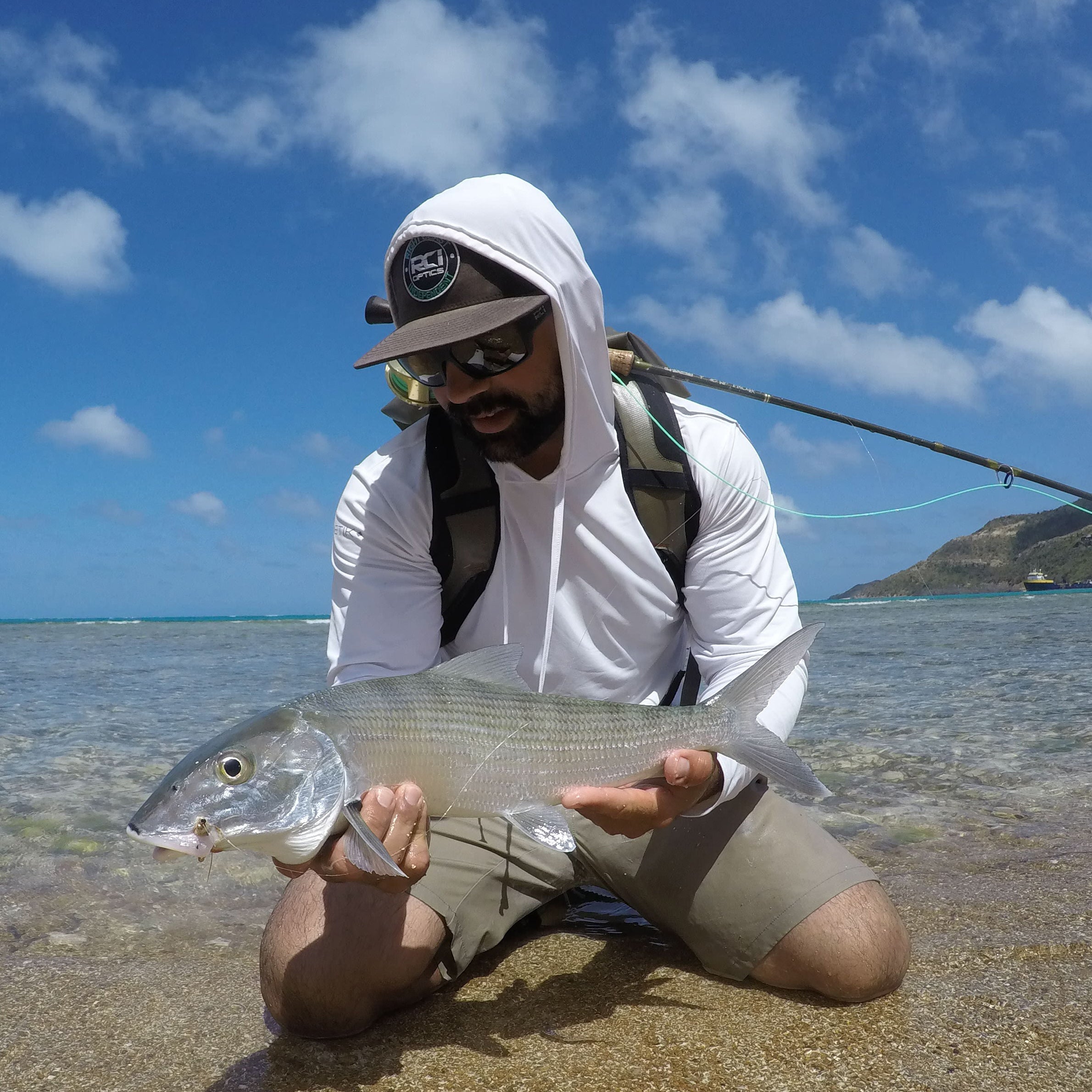
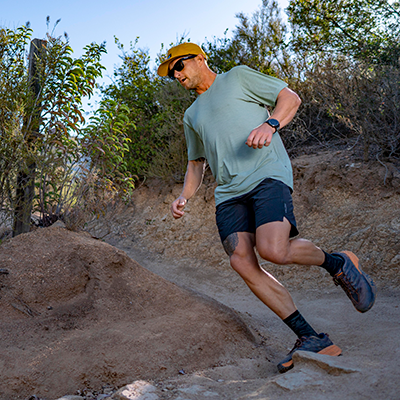



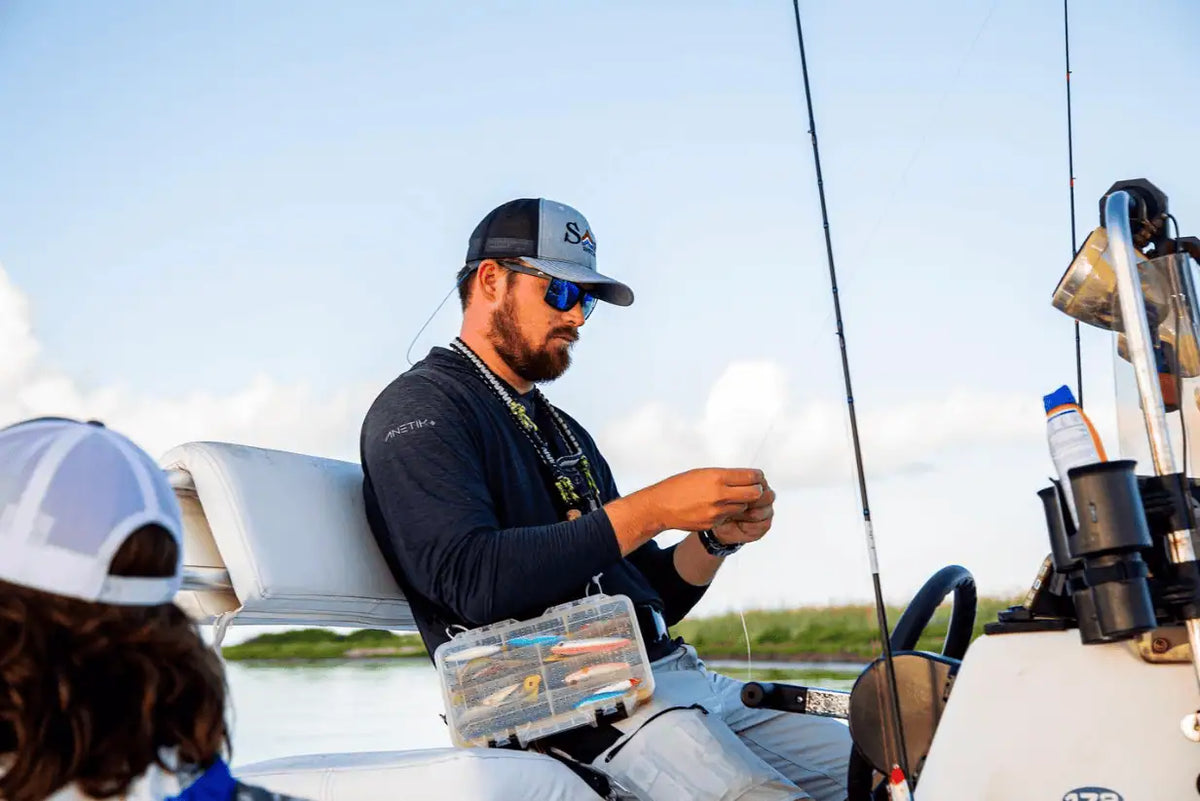
You’ve probably stood on a boat in July, convinced that pulling your sleeves down was going to be the thing that finally did you in. Ninety degrees, sun straight overhead, and every instinct said less fabric, less heat. That’s not entirely true, at least not with the right fabrics.
Sun protection only works when you're actually wearing it. That's the whole conversation. Every fishing shirt on the shelf says UPF 50+. What none of them tell you is whether you'll still have it on six hours in, or whether it's sitting balled up in the console while you fish in a t-shirt because you got too hot and gave up on it.
The fabric is the difference. Not the sleeve length.
Cover Up. Stay Cooler. Here's the Actual Physics.
Bare skin in direct sun absorbs solar radiation straight into your tissue, and that heat load compounds all day. By early afternoon you're already behind, and your body's fighting a battle it started losing at 9 a.m.
A long sleeve fishing shirt built right does two things at once:
- Blocks solar radiation before it reaches your skin. No direct absorption, no compounding heat load, the shirt takes the hit instead of you.
- Amplifies evaporative cooling. Sweat moves outward through breathable fabric, hits open air, and evaporates, pulling heat away from your body. That's your primary cooling system, and long sleeves give it more surface area than bare arms ever will.
The version of long sleeves everyone rightfully hates is a cotton shirt in heat — it traps sweat, kills airflow, and makes you hotter than no shirt at all. That's not a sleeve problem. That's a cotton problem. The right fishing shirt does the opposite of everything cotton does.
What "Breathable" Actually Means on the Water
Every shirt in this category claims it. Here's what it actually requires: heat moving out through the fabric while cooler air moves in, at the same time.
That's what our VINT Cooling Technology is built to do, a specific knit construction, not a coating that washes out after a season. PrimoLite® mesh throughout the body and hood is what makes it possible without adding weight: open-knit structure built for airflow, not a vent panel stitched on as an afterthought.
Here's where most people get tripped up, and where most fishing shirts get sold on a technicality:
|
Property |
What It Does |
What It Doesn't Do |
|
Moisture-wicking |
Pulls sweat away from skin to the fabric surface |
Cool your body on its own |
|
Quick-dry |
Evaporates that moisture rapidly |
Work if there's no breathability underneath |
|
Breathable |
Moves heat out and air in, simultaneously |
Help at all if the fabric's too dense to move air |
Wicking without breathability just relocates the sweat. Quick-dry without wicking leaves moisture sitting on your skin before it can dry. You need the whole loop working together, or you're paying for one-third of a system.
The UPF Conversation Nobody Wants to Have
Every brand in this space leads with UPF 50+. Here's what that number doesn't tell you.
UPF measures how much UV radiation passes through fabric to your skin. UPF 30 blocks roughly 97%; UPF 50 blocks roughly 98%. That 1% difference is real, but the tradeoff that creates it isn't advertised. Higher ratings require denser, tighter-weave fabrics. More threads per square inch means fewer gaps for UV, and fewer gaps for air. The structural density that earns the 50 rating is what limits the breathability that makes a hot-weather shirt work.
For cold-water or overcast fishing, that tradeoff makes sense. For open-water summer heat, a shirt you take off by noon provides zero protection for the rest of the day. A UPF 30 shirt that actually stays on your body for twelve hours protects you more in practice.
|
Rating |
UV Blocked |
Typical Fabric |
Hot-Weather Breathability |
|
UPF 15–24 |
93–95% |
Lightweight knit, cotton blends |
Varies widely |
|
UPF 30–49 |
97%+ |
Technical performance knit |
High in quality construction |
|
UPF 50+ |
98%+ |
Dense woven synthetic |
Often reduced |
Our position is UPF 30+ in fabrics built for breathability, not a consolation, a deliberate call. One more thing: UPF ratings are tested on dry fabric. Quality synthetic construction like PrimoLite® mesh holds that protection when wet. Cotton blends don't.
What to Actually Look For
Not everything marketed as a UPF fishing shirt is built for the conditions that make one necessary. Run any shirt you're considering against this:
- Fabric construction, not just the spec on the tag. Open-knit or mesh construction through the whole body, not just a back vent panel, is the real tell.
- Fit for casting range of motion. If it binds when you reach forward, it's coming off by hour three. Full cast, no pull.
- Hood that actually works in wind. Covers the neck, ears, and back of the head, the spots nobody reapplies sunscreen to. If the drawstring won't hold at boat speed, it's decoration.
- Hardware that holds up in saltwater. Secure snap and pocket closures that stay closed all day, so what you brought out with you comes back with you too.
- Color that works with the sun, not against it. Light grays, sky blues, and stone tones reflect solar radiation instead of absorbing it, and on the flats, they blend instead of flagging every fish in casting range.
Built for This
We built this because we fished in heat and couldn't find a shirt that actually held up, not one that checked boxes on a hang tag, but one still on our backs at 4 p.m. instead of balled up in the console.
A shirt that blocks slightly more UV but makes you too hot to wear it is protecting you for nothing. We'd rather hand you a UPF 30+ shirt engineered to stay on your body all day. The protection only works when you're wearing it. That's the whole guide.
Shop the fishing collection: built for the water, not the catalog.
FAQs
Is it better to wear long sleeves fishing in hot weather? Yes, when the shirt is built for it. A lightweight, breathable long sleeve blocks solar radiation while enabling evaporative cooling — that combination beats bare arms in direct sun. A cotton long sleeve does the opposite. The fabric decides which one you get.
What does UPF mean on a fishing shirt? UPF (Ultraviolet Protection Factor) measures how much UV radiation gets through the fabric to your skin. Higher ratings generally come from denser weaves, which can trade away breathability — worth knowing when the shirt needs to survive a full day of heat, not just a photo.
Should I wear a baselayer under my fishing shirt in hot weather? No — in heat, a baselayer just adds another layer trapping heat against your skin, working against the breathability you're trying to get from the outer shirt.
Can I wear my fishing shirt in cold weather? Yes. VINT Cooling Technology also works as a lightweight active layer in cooler conditions, sitting between a baselayer and an outer shell. That said, this guide is built around hot-weather performance — if cold water's your main game, the layering system matters more than any single shirt.

Leave a comment
This site is protected by hCaptcha and the hCaptcha Privacy Policy and Terms of Service apply.